
Every living organism, from plants to humans, operates on a natural 24-hour cycle known as the circadian rhythm. Often referred to as the “body clock,” this internal timing system regulates essential functions like sleep, metabolism, hormone release, and even mood. Disruptions to this rhythm—such as irregular sleep, night shifts, or excessive screen time—can lead to health issues like insomnia, weight gain, and weakened immunity.
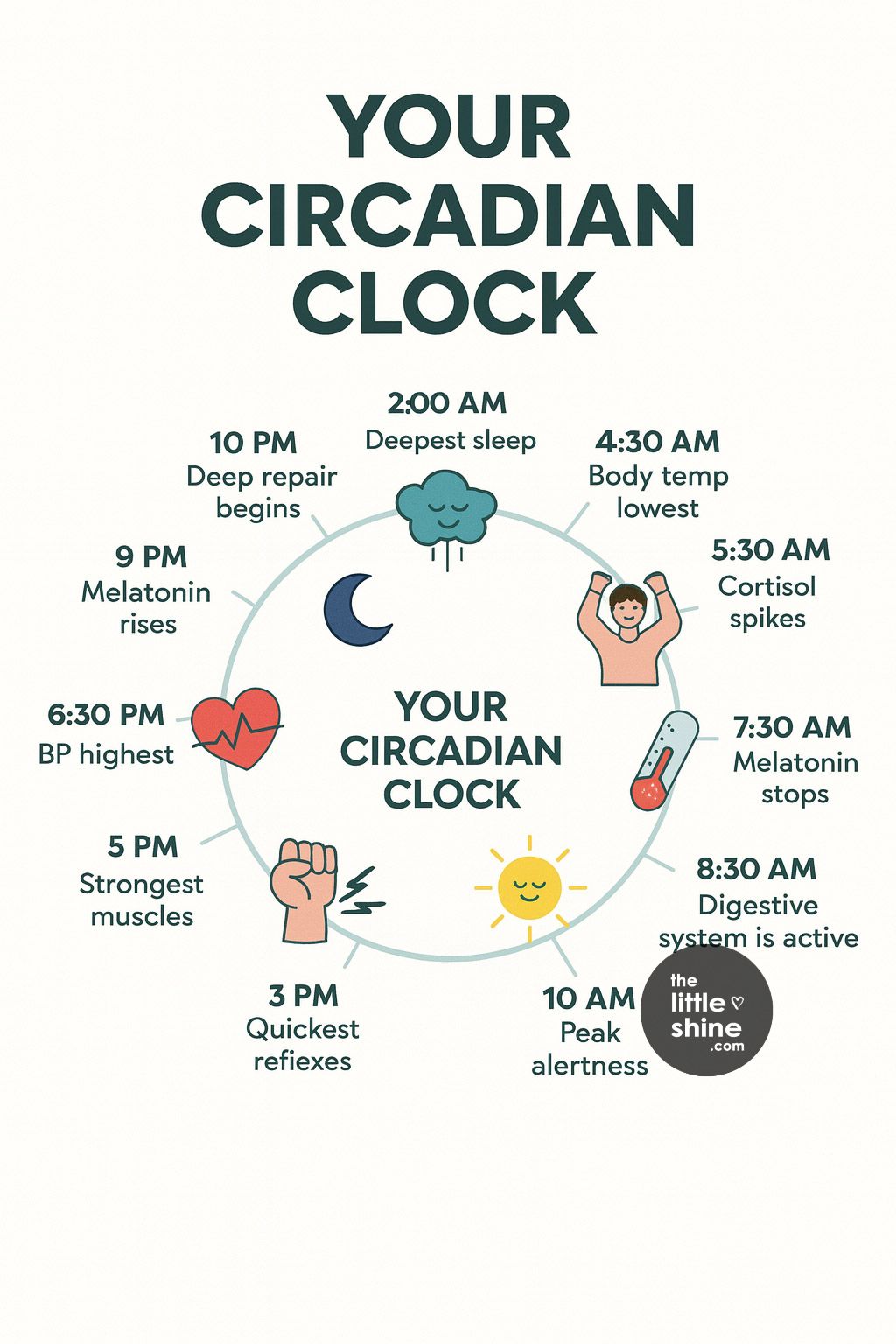
In this article, we’ll explore:
✔ What circadian rhythm is and how it works
✔ Key factors that influence it
✔ Health effects of circadian misalignment
✔ Practical tips to optimize your body clock
What Is Circadian Rhythm?
Circadian rhythms are physical, mental, and behavioral changes that follow a roughly 24-hour cycle, responding primarily to light and darkness in the environment. The term comes from the Latin circa (around) and diem (day).
How Does It Work?
The suprachiasmatic nucleus (SCN), a tiny region in the brain’s hypothalamus, acts as the body’s master clock. It receives light signals from the eyes and synchronizes peripheral clocks in organs like the liver, heart, and gut.
Key regulators include:
- Melatonin (the “sleep hormone”) rises at night and drops in daylight.
- Cortisol (the “wakefulness hormone”) peaks in the early morning.
- Body temperature dips at night and rises during the day.
Factors That Influence Circadian Rhythm
Several external and internal factors can strengthen or disrupt your body clock:
1. Light Exposure
- Natural sunlight in the morning helps reset the SCN.
- Blue light from screens at night suppresses melatonin, delaying sleep.
2. Sleep Schedule
- Irregular bedtimes confuse the body’s internal clock.
- Shift workers often struggle with chronic misalignment.
3. Meal Timing
- Eating late at night disrupts metabolic rhythms, increasing diabetes risk.
- Fasting periods (like overnight) support liver detoxification.
4. Exercise
- Morning workouts can enhance alertness.
- Late-night exercise may delay sleep onset.
5. Age
- Teenagers naturally have delayed sleep phases (night owls).
- Older adults tend to wake earlier (morning larks).
Health Effects of Circadian Disruption
When your body clock is out of sync, it can lead to:
1. Sleep Disorders
- Insomnia, excessive daytime sleepiness, or poor sleep quality.
2. Metabolic Issues
- Increased risk of obesity, diabetes, and heart disease due to altered insulin sensitivity.
3. Mood Disorders
- Depression, anxiety, and seasonal affective disorder (SAD) are linked to circadian dysfunction.
4. Weakened Immunity
- Poor sleep disrupts immune function, making you more prone to infections.
5. Cognitive Decline
- Memory lapses, reduced focus, and long-term risks like Alzheimer’s.
How to Reset Your Circadian Rhythm
If you’re struggling with jet lag, shift work, or poor sleep, try these science-backed strategies:
1. Prioritize Morning Sunlight
- Spend 10–30 minutes outside within an hour of waking.
2. Limit Evening Blue Light
- Use blue-light-blocking glasses or enable night mode on devices after sunset.
3. Stick to a Consistent Sleep Schedule
- Go to bed and wake up at the same time daily, even on weekends.
4. Eat Earlier in the Day
- Avoid heavy meals 3 hours before bedtime.
5. Optimize Your Sleep Environment
- Keep your bedroom cool (60–67°F), dark, and quiet.
6. Exercise at the Right Time
- Morning or afternoon workouts are best; avoid intense activity close to bedtime.
7. Consider Melatonin (Short-Term)
- A low-dose (0.5–3 mg) melatonin supplement can help reset sleep cycles, but consult a doctor first.
Conclusion
Your circadian rhythm is a powerful force that influences nearly every aspect of health. By aligning your daily habits—sleep, light exposure, meals, and activity—with your natural body clock, you can improve energy, mood, and long-term well-being.
Key Takeaways:
✅ Circadian rhythms regulate sleep, hormones, and metabolism.
✅ Light exposure is the strongest external cue for your body clock.
✅ Disruptions increase risks of chronic diseases.
✅ Small adjustments (morning light, consistent sleep, meal timing) can make a big difference.
By respecting your body’s internal clock, you can unlock better health, sharper focus, and more restful nights.
Sources: National Sleep Foundation, Harvard Medical School, NIH Circadian Research Studies.